


What is the relationship between the sound insulation performance and the pore structure of autoclaved aerated concrete (AAC) sheets?
Release Time : 2026-02-24
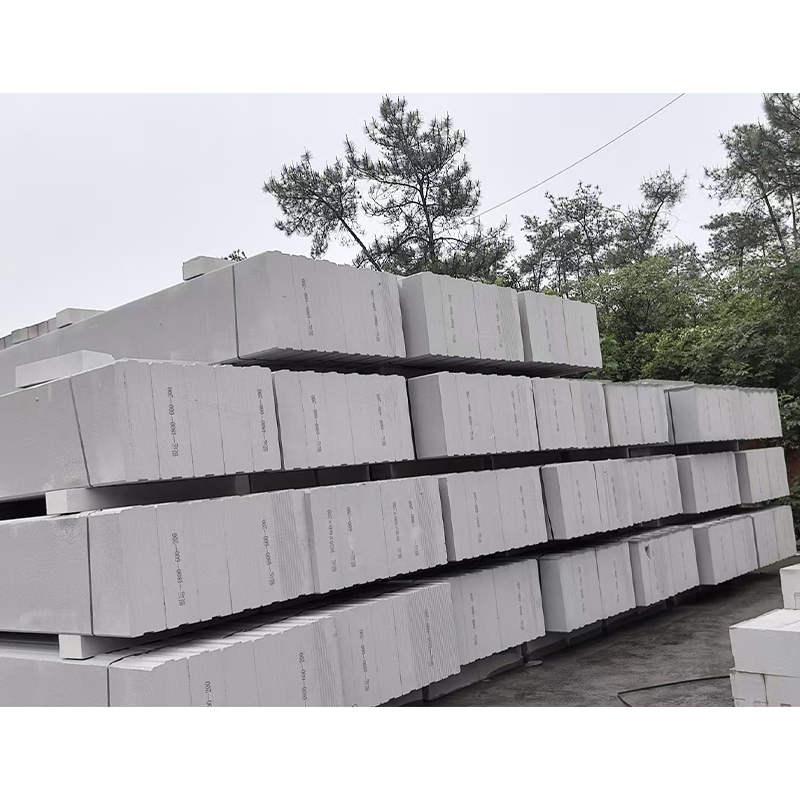
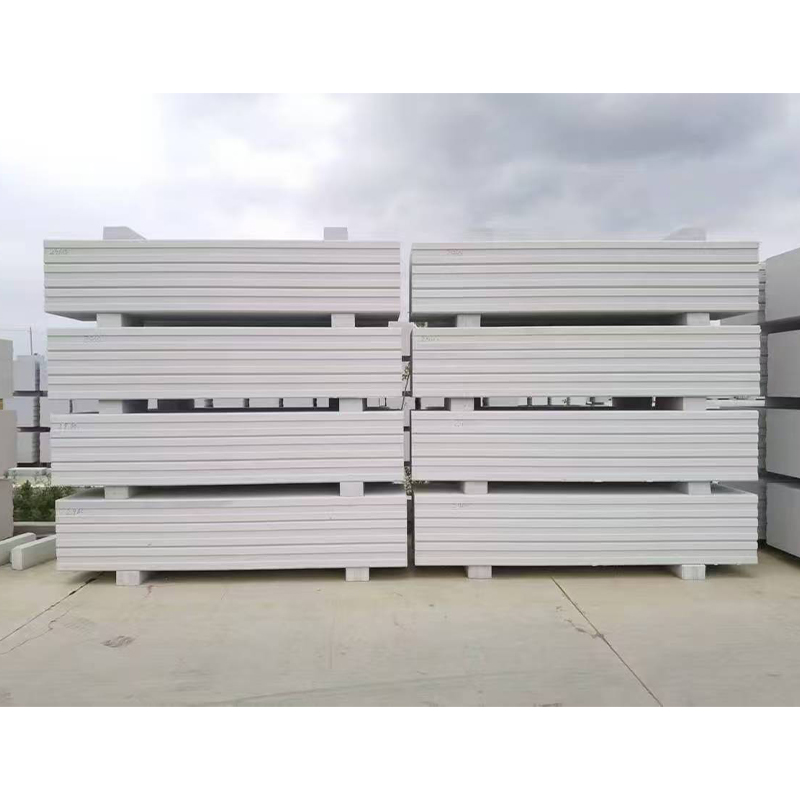
Autoclaved aerated concrete (AAC) sheets, as a lightweight porous building material, exhibit a sound insulation performance closely related to their internal pore structure. This relationship is not only reflected in the alteration of sound wave propagation paths but also involves the material's absorption, reflection, and attenuation mechanisms of sound energy, collectively determining the sound insulation effect of AAC sheets in practical applications.
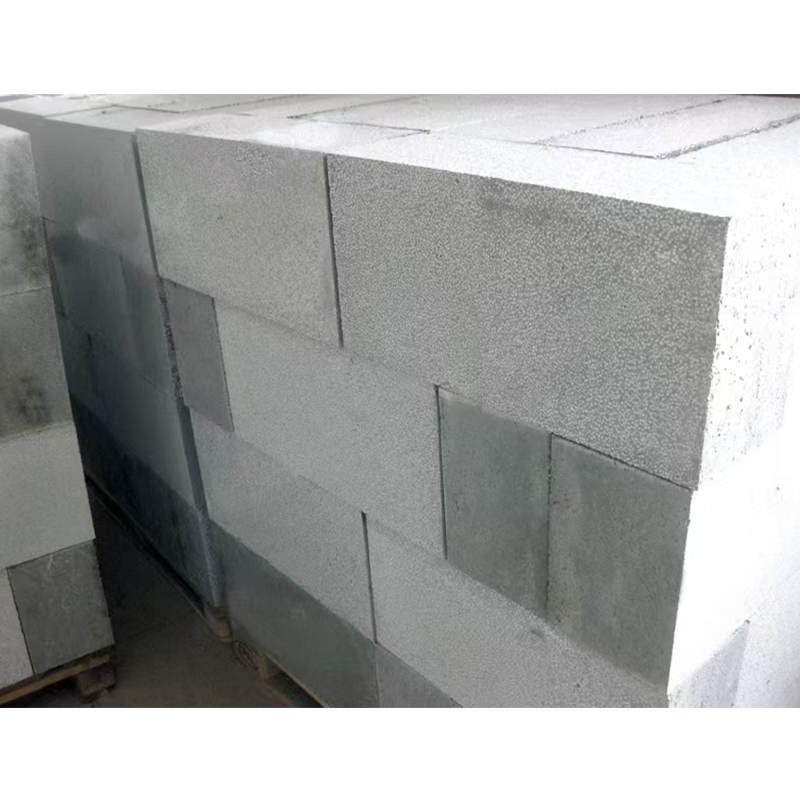
The pore structure of AAC sheets is characterized by uniformly distributed closed pores. These pores are formed during the material preparation process using aluminum powder foaming, and are independent and unconnected to each other. When sound waves are incident on the surface of the sheet, they first encounter a reflective interface formed by the dense surface layer, and some sound energy is directly reflected back to the external environment. The unreflected sound waves enter the interior of the material, undergoing multiple reflections and refractions between the walls of the closed pores. During this process, the sound wave propagation path is significantly prolonged, and the energy is gradually consumed due to continuous collisions with the pore walls, thereby reducing the intensity of sound energy penetrating the sheet.
The independence of the closed pores is a key factor in the sound insulation performance of AAC sheets. Unlike traditional porous materials, the pores in ALC sheets do not form a connected network, preventing sound waves from propagating directly through the pore channels. This structural characteristic prevents sound waves from forming an effective propagation path within the material; instead, energy is transferred through the vibration of the pore walls. This vibration further induces friction and heat loss in the surrounding medium, converting sound energy into heat energy and ultimately attenuating the sound. Furthermore, the uniform distribution of the closed pores ensures the consistency of the material's overall sound insulation performance, avoiding sound leakage problems caused by localized weak points.
The size and shape of the pores have a moderating effect on sound insulation performance. Studies show that when the pore size is much smaller than the wavelength of sound waves, the material's scattering effect on sound waves is enhanced, and the propagation direction of sound waves between the pores changes randomly, further lengthening the propagation path. Simultaneously, the larger surface area of the tiny pores leads to more frequent interaction with sound waves, which facilitates the dissipation of more sound energy through frictional loss. When the pore shape is close to spherical, it reduces the directional bias during sound wave propagation, resulting in more balanced sound insulation performance across all frequency bands.
The porosity and density of ALC sheets both affect their sound insulation performance. Higher porosity means more pores within the material, resulting in a more complex sound wave propagation path and improved sound insulation. However, increased porosity reduces material density, potentially negatively impacting the sound insulation of low-frequency sound waves. Therefore, in actual production, it is necessary to optimize the raw material ratio and foaming process to ensure sufficient areal density while maintaining appropriate porosity, in order to effectively block broadband sound waves.
From an acoustic theory perspective, the sound insulation performance of ALC sheets conforms to the synergistic effect of the mass law and the coincidence effect. The mass law states that the greater the areal density of a material, the stronger its ability to block sound waves. ALC sheets, through their lightweight and high-strength characteristics, achieve high sound insulation performance at a relatively low areal density, thanks to the additional attenuation of sound energy by their porous structure. The coincidence effect explains the phenomenon of decreased sound insulation performance at specific frequencies. By adjusting the pore parameters, ALC sheets can effectively avoid the coincidence effect occurring at frequencies that overlap with common noise bands, thus maintaining stable sound insulation performance. In practical applications, the sound insulation performance of ALC sheets is also affected by installation techniques and construction methods. Improper treatment of the panel joints can lead to the formation of sound bridges, reducing the overall sound insulation effect. Therefore, using techniques such as staggered assembly, filling with elastic gaskets, and grouting with special sealant can effectively block the sound wave propagation path and improve the sound insulation performance of the wall system. Furthermore, adding sound-absorbing materials or constructing an air layer on the panel surface can further enhance the absorption capacity of mid-to-high frequency sound waves, achieving a more comprehensive sound insulation effect.